

The honest answer is… it depends!
It’s one of the first questions clients ask us, and the answer is rarely as simple as 8 weeks, which we know isn’t the answer that you want to hear!
For a straightforward planning application, the statutory determination period is generally:
- 8 weeks for most minor and householder applications;
- 13 weeks for major applications; and
- 16 weeks where an Environmental Impact Assessment is required.
However, these timescales relate to the determination of the application, not the entire planning process.
In reality, the overall timeframe can be considerably longer…
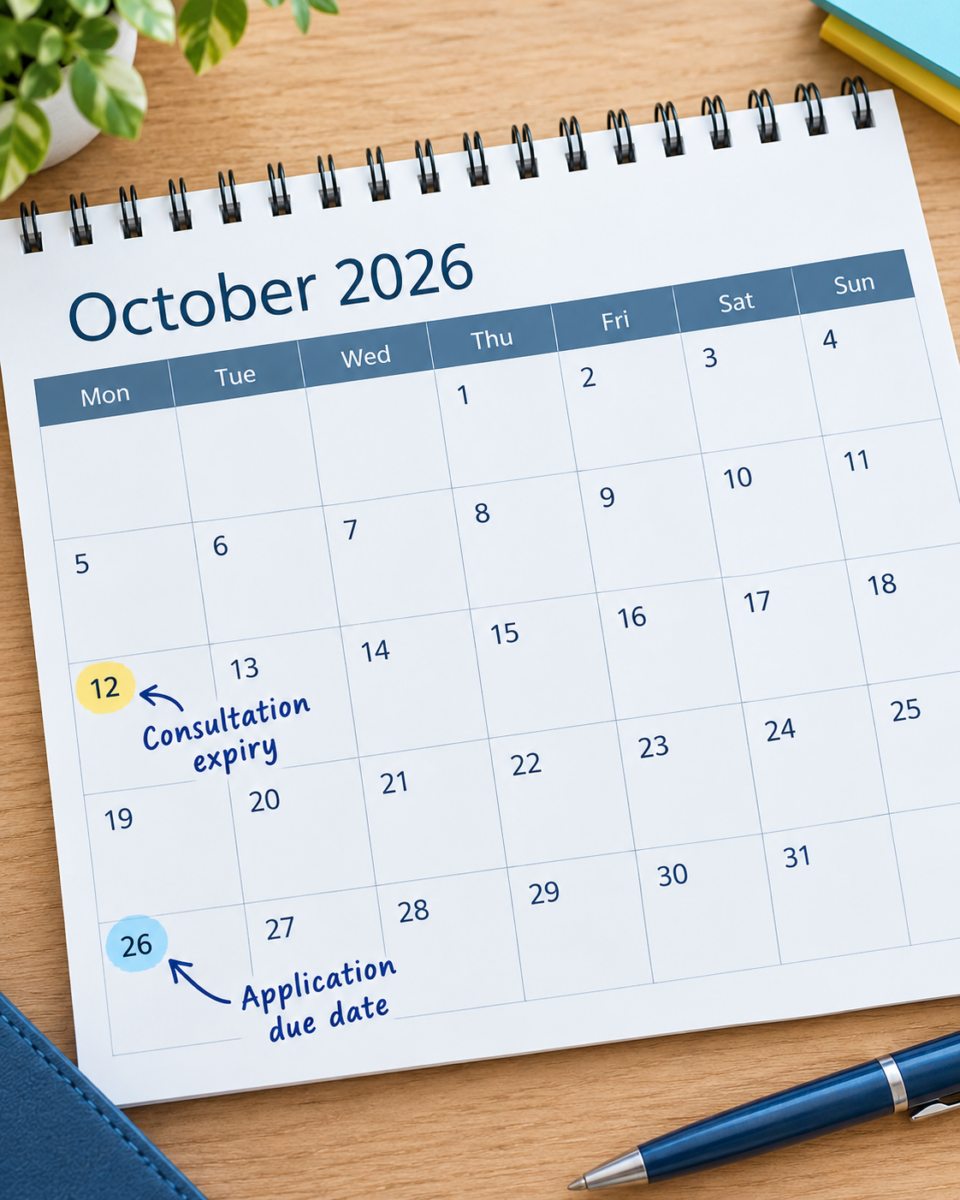
Stage 1 (if recommended): Pre-Application (2-8+ weeks)
Before submitting an application, it can be worthwhile to seek pre-application advice from the Local Planning Authority (LPA), providing you with an opportunity to understand how the Council is likely to view your proposal before committing to a full application.
The timeframe varies significantly between Councils and depending on the complexity of the proposal. For example, a simple project may be relatively quick, whereas a larger or more complex development, it can take several months.
Whilst this does add some time onto the planning process, our advice is to not underestimate this stage, as a little more work before submission can sometimes save a lot of time in the long run!
Stage 2: Preparing the application (2–12+ weeks)
This is often the part of the process that some clients don’t always see.
A planning application isn’t just a form and a set of drawings. Depending on the proposal, it may require input from architects, highways specialists, ecologists, arboriculturalists, flood risk experts, landscape professionals, heritage specialists and other technical experts.
The amount of information required will depend on the scale, location and nature of the development.
This stage can therefore take anywhere from a couple of weeks to several months.
Stage 3: Submission and validation (around 1–4 weeks)
Once the application is submitted, the LPA will check that the necessary information has been provided. This is known as validation.
As with the Pre-Application process, the validation timeframe varies significantly between Councils!
If everything is in order, the application will be validated, and the determination period will begin. Alternatively, if information is missing, the Council may request further documents before validating the application.
This is one reason why getting the submission right the first time can make a real difference!
Stage 4: Consultation and determination (8–16 weeks)
Once validated, the application enters the formal determination process.
The Council may consult upon the following:
- Local residents;
- Parish or town councils;
- Highways authorities;
- Environmental bodies;
- Heritage consultees;
- Drainage authorities; and
- Other relevant statutory consultees.
The planning officer will then assess the proposal against relevant planning policies and other material considerations.
For many applications, this is where the statutory 8-week or 13-week period applies, however that doesn’t necessarily mean you’ll receive a decision exactly on the final day. Many applications can take longer where there are outstanding issues, objections, amended plans or negotiations with the Council.
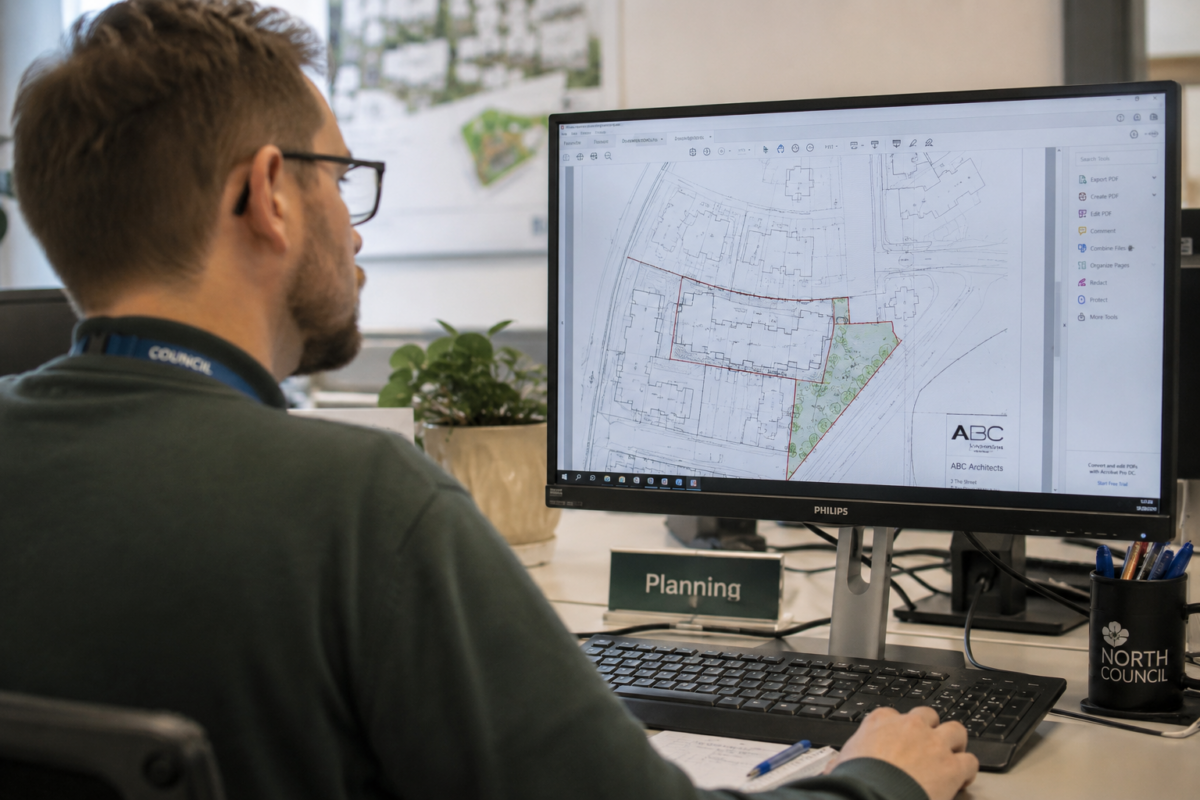
Stage 5: Amendments and negotiations: potentially several weeks or months
This is one of the biggest reasons planning applications can take longer than expected, as the Council may identify concerns with the proposal.
That doesn’t necessarily mean the application is going to be refused. Often, there is an opportunity to amend the scheme or provide additional information to address those concerns.
For example, this could involve:
- Reducing the scale of a development;
- Changing the design;
- Altering access or parking arrangements;
- Providing additional landscaping;
- Addressing ecological concerns; or
- Revising plans following neighbour comments.
These discussions can improve the prospects of achieving permission, but they can also extend the overall programme.
Stage 6: The decision isn’t always the end
Even once planning permission has been granted, there may still be work to do.
A permission may be subject to planning conditions which need to be discharged before development can commence or before particular works can take place.
There may also be:
- Section 106 agreements
- Biodiversity Net Gain requirements
- Community Infrastructure Levy requirements
- Building Regulations
- Other technical approvals
For some developments, this post-permission stage can take several more weeks or months.
Further to the above, further delays may be caused when an application is called in to Planning Committee, as there can be an additional wait for the next available committee meeting. If an application misses the agenda deadline, this can push the decision back by several weeks.
How to get in touch…
Having a consultant involved in your project, is a great way to reduce the risk of errors and it can drastically speed up the timeline for achieving planning permission.
If you think you need support with your project, we’d be happy to help.
You can contact us directly via the details below, or if you would prefer, you can fill in the form below and one of the team will be in touch.
T: 01908 592580 E: info@warnerplanning.co.uk
Recent Posts
Houses in Multiple Occupation (HMO)
With house prices rising and the ongoing challenge of building enough homes to meet demand there are many people seeking alternative ways to live independently without having to fund a mortgage or rent for an entire property. It can also be a great way to make friends and socialise if you are moving to a new area for work or studying.
How long does planning really take?
It’s one of the first questions clients ask us, and the answer is rarely as simple as 8 weeks, which we know isn’t the answer that you want to hear!
AI and Planning: The Future of Applications?
How can AI support planners without replacing the human judgement at the heart of good planning?


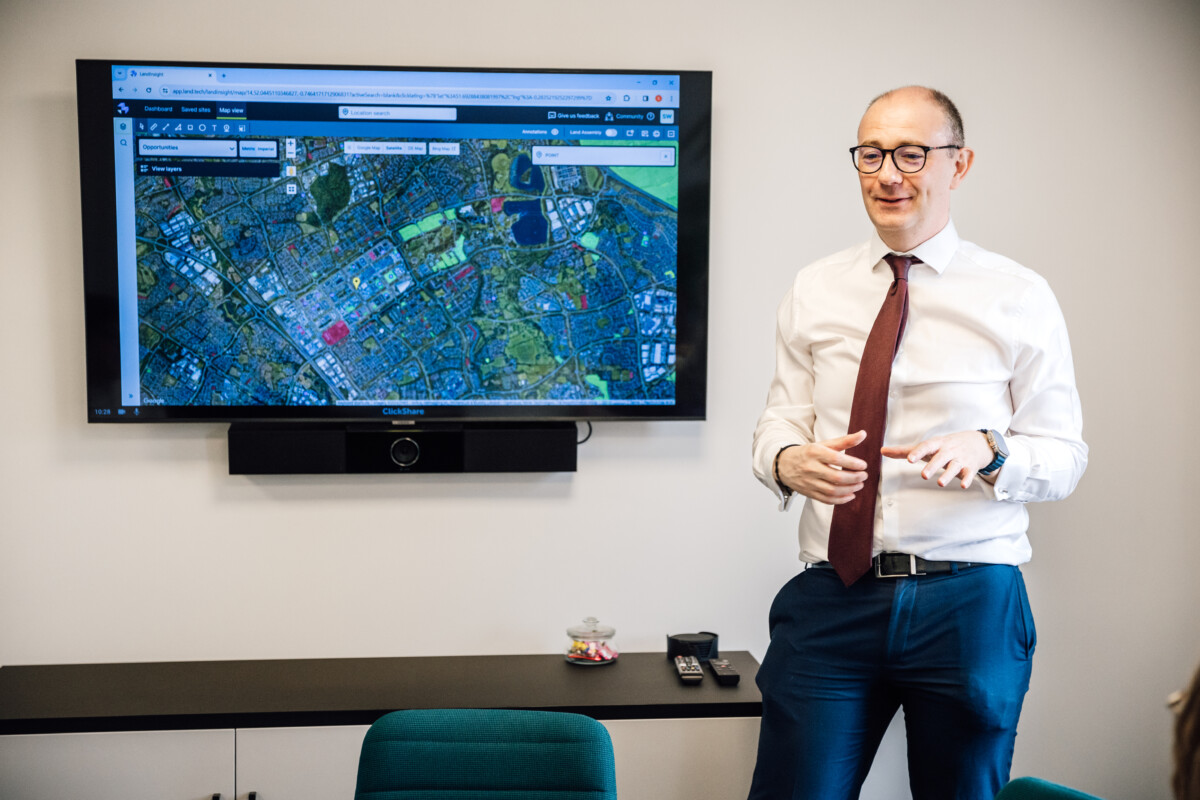



 A Pre-Application submission offers the opportunity to test the principle of development and secure informal views on a scheme. Some feedback also highlights how a scheme might need to be amended to make it more acceptable prior to formal submission which is helpful to have this guidance at an early stage.
 Pre-Application submissions are a great opportunity to provide high-level information about a proposal without the commitment of a full suite of technical reports being required. This allows the Council to provide an initial secure and informal view and allows them to influence proposals without the cost and resources associated with a formal application. Mostly Pre-Applications remain confidential so any proposals are not usually publicised externally which can be helpful with any local sensitivities or commercial considerations.
 If a positive Pre-Application is received this can be a positive addition to support any land-sale if a site is looking to be disposed of. Whilst a positive Pre-Application is not a guarantee for future success it can be used to support any future application and sets out the positive approach that has been taken to Council engagement.
 A Pre-Application submission helps to alert Officers to the potential for further formal submissions in the future. If Officers have had previous involvement with a Pre-Application enquiry it can put any subsequent submission in a more positive light as it isn’t being presented ‘cold’ to the Council. Officers often appreciate this approach.
 Once a formal submission has been made following a Pre-Application enquiry, Officers will often consider this in the context of how open/flexible they are to negotiations/receiving amended/additional information. Many Councils will be more amenable to discussions if a Pre-Application was submitted initially, so beginning with this process can provide additional benefits.
 A Pre-Application response can highlight any technical matters which are likely to be significant as part of any formal application to allow time/resources to be allocated prior to a submission and hopefully lessen the risk of not securing Officer support. A Pre-Application response also often provides a list of information which will be required for validation which can save time and money in the long run!
 Once good working relationships have been established with Officer during a Pre-Application it can often result in early notice of any key relevant events at the Council e.g. notification of a Call for Sites which can be helpful to get ahead of the curve of the process.